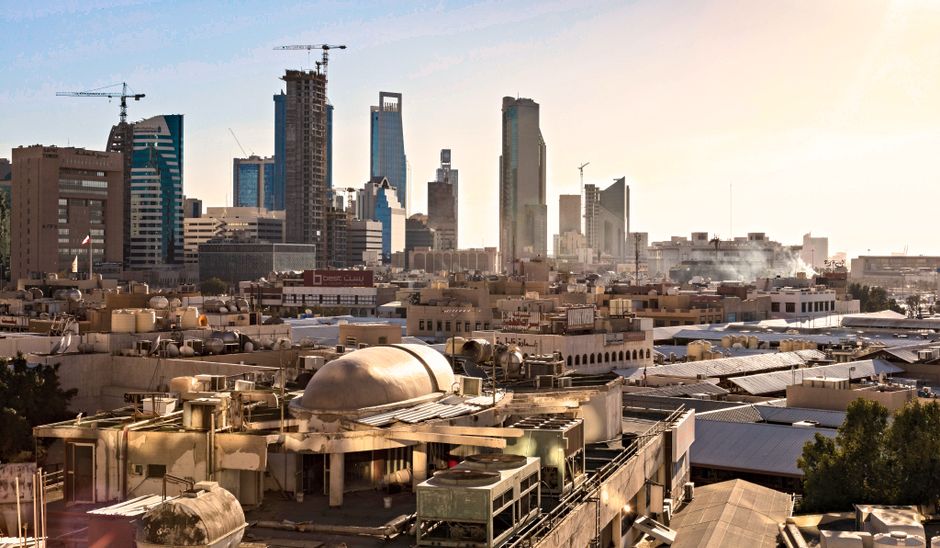
Sleep researchers have a name for what millions of Riyadh residents experience every summer: heat-fragmented sleep. Core body temperature must drop by roughly 1°C for the brain to shift into deep, restorative sleep stages — and when outdoor temperatures hold above 38°C well past midnight, as they do across the Saudi capital from June through September, that physiological trigger is genuinely hard to hit. The problem is not just discomfort. It is architecture, light pollution and a city noise floor that barely quiets even at 3 a.m.
Why does this matter right now? Global attention to hormones, circadian biology and sleep quality has surged in 2026, driven in part by new clinical reporting on how environmental disruption — not just stress or screen time — degrades sleep across entire populations. Riyadh's specific combination of extreme summer heat, high-intensity LED street lighting and a construction boom that runs through the night makes it a particularly acute case. The Saudi Vision 2030 urban expansion has brought prosperity and new infrastructure to the capital, but it has also brought 24-hour crane operations and floodlit worksites to residential districts from Diriyah to Al Malaz.
The Three Enemies of Rest
Temperature is the most discussed but least managed of the three factors. Most Riyadh apartments rely on split-unit air conditioners, and energy costs under the Saudi Electricity Company's residential tariff — around 18 halalas per kilowatt-hour for standard consumption — push many families to set units at 24°C or warmer overnight. Sleep medicine specialists internationally recommend a bedroom temperature between 16°C and 19°C for optimal rest. That six-to-eight-degree gap is not trivial. Studies published in the journal Sleep Medicine Reviews found that sleeping in environments above 24°C reduced slow-wave sleep by up to 15 percent in healthy adults.
Light is the second disruptor. Riyadh's skyline along King Fahd Road is among the most intensely lit urban corridors in the Middle East at night, with LED billboards operating at full brightness until 2 a.m. under current municipality regulations. The Olaya district, where residential towers sit directly adjacent to commercial strips, sees measurable light bleed into bedroom windows even on high floors. Blue-spectrum light — the wavelength dominant in LED sources — suppresses melatonin production, the hormone that signals the body to prepare for sleep. A 2024 cohort study from King Saud University's College of Medicine found that 62 percent of Riyadh participants reported difficulty falling asleep within 30 minutes, a figure significantly above the global average of around 45 percent.
Noise rounds out the triad. The intersection of Al Urubah Road and Prince Mohammed bin Abdulaziz Road in northern Riyadh — a corridor that feeds traffic from King Khalid International Airport southward — records ambient noise levels above 65 decibels through much of the night during peak summer travel season. The World Health Organization recommends nighttime outdoor noise below 40 decibels for healthy sleep. Construction activity near Riyadh Season entertainment venues, which operates under extended permits, adds mechanical noise in districts including Al Qayrawan and Hittin, neighbourhoods that grew rapidly in the last decade.
What You Can Actually Do
The Saudi Health Council's National Sleep Awareness Program, relaunched in April 2026 with clinics embedded at three primary care centres including the King Abdullah bin Abdulaziz University Hospital in Riyadh, recommends a practical layered approach. Pre-cooling bedrooms to 19°C at least 45 minutes before sleep — accepting the short-term energy cost — produces measurable improvement in sleep onset time. Blackout curtains, available widely in the home sections of IKEA's Riyadh store on King Abdulaziz Road starting at around SAR 85 per panel, block both light and provide modest thermal insulation. For noise, a white noise device or a basic fan set to low creates an acoustic mask that research consistently shows reduces nighttime awakenings.
The larger picture is a city-planning conversation that Riyadh's municipal authorities have not yet fully engaged. Curfews on billboard brightness, construction noise ordinances with enforceable nighttime limits, and green-canopy urban design — the kind being piloted in the Al Widyan district — all address sleep quality at the population level. Individual fixes help. But without structural change, residents will keep fighting their environment one blackout curtain at a time. Consult a local physician or contact the National Sleep Awareness Program clinics if sleep disruption is persistent or affecting daily functioning.