Wellness
The Sleep Environment Checklist for Better Rest
From blackout curtains to bedroom temperature, Riyadh's wellness community is getting serious about the room where everything begins.
4 min read
Wellness
From blackout curtains to bedroom temperature, Riyadh's wellness community is getting serious about the room where everything begins.
4 min read
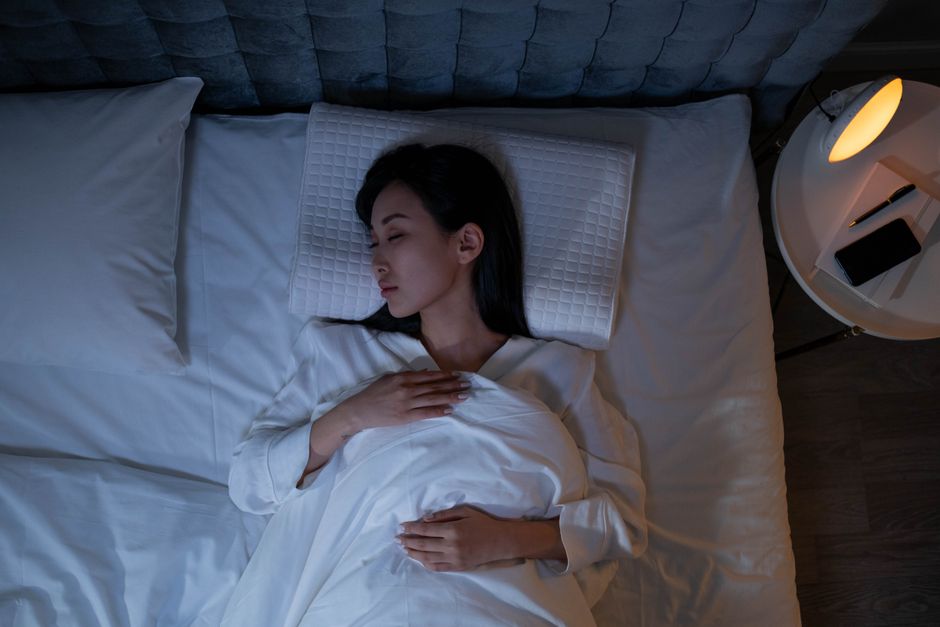
Seven hours. That is the minimum sleep duration the World Health Organization recommends for adults, yet surveys conducted across Gulf cities consistently show that somewhere between 40 and 50 percent of residents fall short of that threshold on work nights. The number is not surprising to anyone who has spent a summer in Riyadh, where the sun rises before 5 a.m., the heat lingers past midnight, and the city's social calendar barely pauses between Thursday evenings and Friday afternoons.
The timing matters. A wave of hormone-health awareness is sweeping global wellness media in mid-2026, with specialists pointing to sleep quality as the single biggest lever for regulating cortisol, melatonin, and metabolic function — the same hormones now dominating conversations in clinics from London to Riyadh. For residents of a city that runs hard through Ramadan, school exam season, and the summer heat all in the same calendar stretch, the bedroom environment has moved from afterthought to clinical priority.
Sleep scientists at King Saud University's College of Medicine published findings in early 2025 showing that residents of high-density Riyadh neighbourhoods — specifically those within two kilometres of the King Fahd Road corridor — reported sleep onset times averaging 35 minutes longer than respondents in quieter suburban zones such as Al-Nakheel and Hittin. Light pollution and ambient noise were the two most cited disruptors. The research reinforced what environmental sleep studies have been demonstrating globally since at least 2018: the physical room itself is not passive. It is either working for you or against you.
Temperature is the variable most practitioners flag first. The human body drops its core temperature by roughly 1 to 1.5 degrees Celsius during sleep onset, a process that is actively sabotaged when bedroom air sits above 24 degrees Celsius. In a city where July outdoor temperatures regularly breach 42 degrees, the internal thermostat of any bedroom depends almost entirely on the calibration of its split-unit air conditioner. Setting the unit to between 19 and 21 degrees Celsius before bed — not after lying down — gives the room a 20-minute head start on cooling the mattress surface itself.
Light is the second line of the checklist. The King Abdullah Financial District, with its glass towers and LED perimeter lighting that stays active until 2 a.m., has created a new category of light-pollution complaint among residents in adjacent buildings in the Al-Aqiq district. Blackout curtains — not sheer thermal drapes, but fully opaque fabric lined panels — retail at between SAR 180 and SAR 450 per window at home furnishing outlets along Olaya Street and inside Riyadh Park Mall on King Abdullah Road. Several sleep-focused interior consultants operating out of the Saudivision wellness hub in Al-Malqa now include a bedroom light audit as a standard opening service, charged at roughly SAR 350 per session.
Noise is often the disruptor that residents underestimate. A consistent low-level sound — a white noise device, a standing fan, or even a dedicated app running through a Bluetooth speaker placed at floor level — can mask the irregular spikes from traffic on Makkah Al-Mukarramah Road or the call to prayer amplification that varies in intensity by neighbourhood. The goal is not silence but consistency; the brain downregulates arousal responses to steady-state audio far more readily than it ignores unpredictable sound.
Screens deserve their own checklist line. Blue-spectrum light from phones and tablets suppresses melatonin production for up to 90 minutes after exposure. The practical rule is a hard stop 45 minutes before the intended sleep time, with the phone physically moved to a charging point outside arm's reach. Several sleep clinics affiliated with the Dr. Sulaiman Al-Habib Hospital group — which operates facilities in Olaya and Al-Suwaidi — now include screen hygiene as a formal item in their insomnia intake forms.
The checklist closes with bedding. A mattress older than eight years and a pillow that has lost its loft are quietly degrading posture and pressure-point comfort every single night. Certified sleep wellness retailers on Al-Urubah Road currently stock pressure-mapped diagnostic beds starting at SAR 2,800, with same-week delivery across most of northern Riyadh. That price is not nothing — but measured against the compound productivity and health cost of chronic poor sleep, practitioners argue it is the most straightforward investment most adults are not making. Consult a local medical professional before making significant changes if you have an existing sleep disorder or respiratory condition.
About this article
Published by The Daily Riyadh
Spread the word
Daily brief
Free, in your inbox before 7am. Weekdays.
The Daily Network — local news across Australia