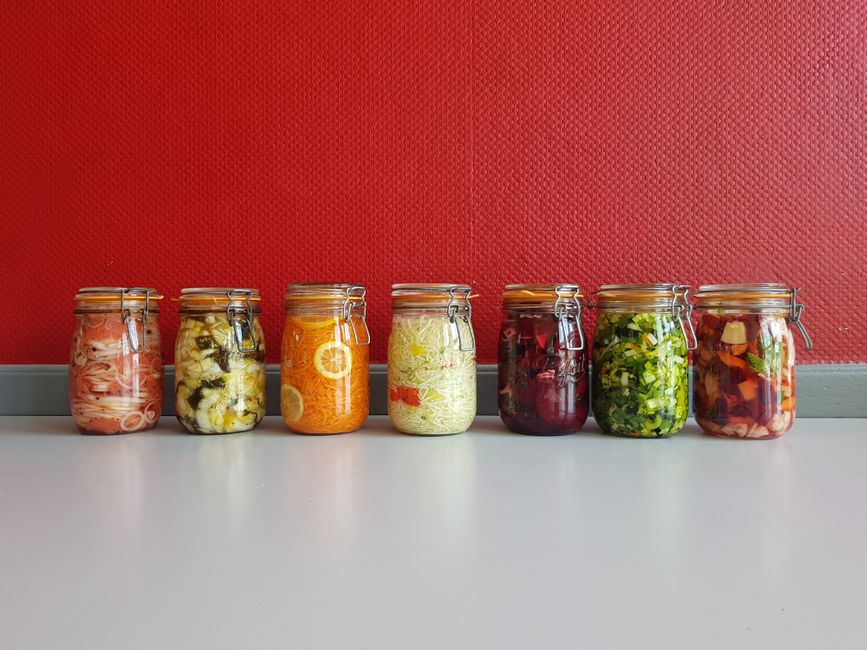
Gut health is no longer fringe medicine. A growing body of research links the trillions of microorganisms living in the human digestive tract to everything from immune function to mood regulation, and nutritionists across the Gulf are fielding more questions about it than ever before. The good news for residents of Riyadh: many of the most effective fermented foods are already embedded in local cuisine or sitting on supermarket shelves a short drive away.
Interest in the gut microbiome has surged across the region since the Saudi Food and Drug Authority updated its functional foods guidelines in late 2024, raising consumer awareness of probiotic labelling and what it actually means. Dietitians at King Faisal Specialist Hospital and Research Centre in Al Mathar district report that patient inquiries about digestive health have roughly doubled over the past eighteen months, driven partly by post-pandemic attention to immunity and partly by a broader cultural shift toward preventive wellness. Riyadh's gym culture, long focused on protein shakes and macros, is quietly expanding its vocabulary to include phrases like "leaky gut" and "microbiome diversity."
What the Research Actually Says
The science is persuasive, if still evolving. A landmark study published in Cell in 2021 — still widely cited by researchers — found that a diet high in fermented foods increased microbiome diversity and reduced inflammatory markers in participants over a ten-week period, outperforming a high-fibre diet alone. Diversity matters because a gut with a wider range of bacterial species tends to be more resilient. Fermented foods introduce live cultures, known as probiotics, that can temporarily colonise the gut and crowd out harmful bacteria.
Not all fermented products are equal. Heat-treated items — many pickles and some yoghurts — kill off the live cultures during processing. Look for labels that read "contains live and active cultures" or, in Arabic, يحتوي على ثقافات حية ونشطة. Unpasteurised products carry the most viable bacteria, though pregnant women and immunocompromised individuals should consult a doctor before making dramatic dietary changes.
Where to Find Them in Riyadh
Start close to home. Leben — the thin, tart drinking yoghurt ubiquitous across Saudi households — is one of the most accessible fermented foods in the city. Brands like Al Marai and Nadec produce versions with live cultures available at every Danube or Panda branch. A one-litre carton of Al Marai leben costs around 4 SAR, making it one of the cheapest probiotic foods on the planet per serving.
For something more adventurous, the Carrefour hypermarket on Olaya Street stocks a respectable international fermented foods section, including Korean kimchi (SAR 22–30 per jar), Japanese miso paste, and German-style sauerkraut. Miso deserves particular attention: a tablespoon dissolved into warm — not boiling — water makes an umami-rich broth that preserves the live lactobacillus cultures. Boiling destroys them.
Al-Sadhan supermarket, with branches across the city including in the Diplomatic Quarter, carries a selection of labneh — strained yoghurt fermented longer than standard varieties — from local and Lebanese producers. Labneh with a sharp, pronounced tang has typically undergone more fermentation and contains higher counts of beneficial bacteria. Pair it with whole grain bread for a practical, low-cost gut-health breakfast.
Traditional kefir, the fermented milk drink with roots in the Caucasus, is now available at health-focused retailers like The Organic Market in Al Nakheel district. At roughly 28 SAR per 500ml bottle, it costs more than leben but delivers a wider range of bacterial strains — some studies count upward of thirty distinct probiotic species in quality kefir versus the two or three typically found in commercial yoghurt.
For those willing to venture into Riyadh's older commercial districts, the covered market streets near Batha neighbourhood stock traditional preserved vegetables, including olives cured in brine rather than vinegar — brine-cured products retain live cultures while vinegar-pickled ones generally do not. Ask specifically for zeitoun mukhalal, and look for jars that are cloudy rather than clear, a sign of active fermentation.
The practical starting point is simple: add one fermented food to one meal per day for two to four weeks and monitor how your digestion responds. A registered dietitian — available through the Saudi Dietetic Association's referral directory at sda.org.sa — can help design an approach suited to individual health conditions. The gut microbiome is highly personal, and what works in broad population studies does not always translate to every stomach in every household on every street in Riyadh.