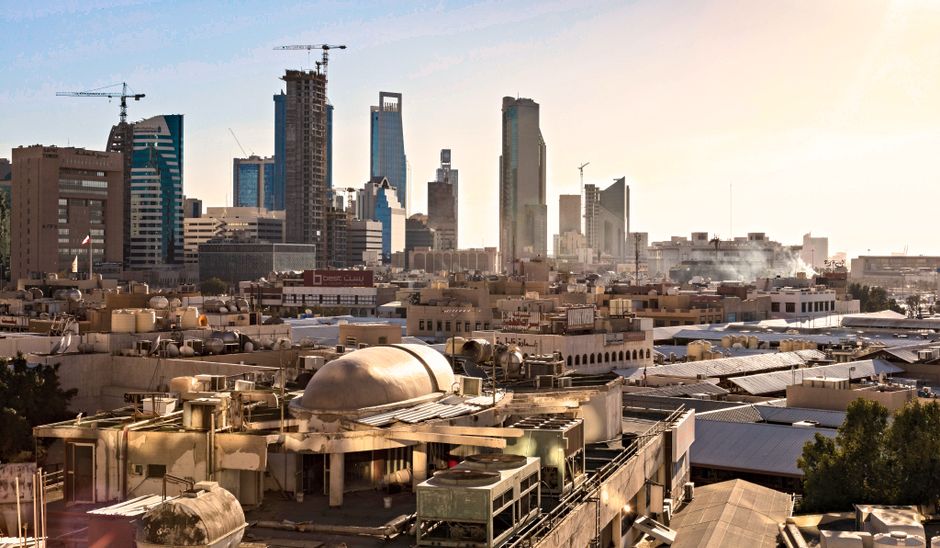
Riyadh's summer is brutal by any measure. Outdoor temperatures regularly breach 45°C by afternoon, and even at 3 a.m. the air sitting over the Olaya district rarely dips below 30°C. Sleep researchers increasingly argue that this thermal reality — combined with the city's chronic light pollution and persistent traffic noise — explains why so many residents report waking unrefreshed despite clocking seven or eight hours in bed.
This matters right now. The holy month calendar, school-year restructuring under Vision 2030's education reforms, and a surge in late-night social activity around King Abdullah Financial District have collectively pushed Riyadh's average bedtime past midnight for a significant share of adults. Layer on a punishing physical environment, and the city has the ingredients for a population-scale sleep debt problem with real consequences for productivity, metabolic health, and mood.
Three Enemies, One Bedroom
Temperature is the most underestimated factor. The human body needs to drop its core temperature by roughly 1°C to initiate and sustain deep sleep. In a bedroom where the air conditioning unit is struggling against a 47°C exterior — common in older apartment blocks along Tahlia Street — that drop simply doesn't happen efficiently. Sleep medicine clinicians at King Faisal Specialist Hospital and Research Centre have noted a seasonal uptick in patients presenting with fatigue-related complaints every June through August, a pattern consistent with what sleep scientists call thermoregulatory interference.
Light is the second culprit. Riyadh's rapid vertical development has filled the skyline with LED signage, construction floodlights, and the blue-white glow of the King Salman Park project perimeter lighting, which runs through the night during its current Phase 2 construction. Blue-spectrum light suppresses melatonin production — the hormone that signals to the brain that sleep time has arrived. A bedroom facing west toward the Ring Road gets both headlight spill and the ambient orange haze that hangs over the city, creating a photonic cocktail that can delay melatonin release by 90 minutes or more, according to research published in the journal SLEEP in 2024.
Noise rounds out the trio. The Saudi General Authority of Civil Aviation recorded a 14 percent increase in flight movements through King Khalid International Airport in the first quarter of 2026 compared to the same period in 2024. Residents in the Al Nakheel and Hittin districts, both sitting under the northern approach corridor, report being jolted awake by aircraft as late as 1:30 a.m. Combine that with the construction convoys servicing Diriyah Gate Development Authority sites and the delivery traffic that feeds Riyadh's 24-hour e-commerce habit, and ambient sound in residential neighbourhoods routinely exceeds 55 decibels after midnight — the World Health Organization's ceiling for undisturbed sleep.
What You Can Actually Do About It
The fixes are specific, not generic. On temperature: set your bedroom air conditioning to between 18°C and 20°C and run it for at least 45 minutes before you intend to sleep, not just when you get into bed. If electricity costs are a concern — Riyadh residential tariffs sit at around 18 halalas per kilowatt-hour for standard consumption — a ceiling fan on low running alongside a modestly set AC is more efficient than AC alone set to 23°C.
On light: blackout curtains sold at IKEA's Riyadh outlet on King Abdulaziz Road start at around SAR 85 per panel and eliminate the majority of external light. Phone screens should go dark 60 to 90 minutes before bed; the Saudi Health Council's Seha virtual care platform has published Arabic-language guidance on this under its 2025 Healthy Habits initiative, freely downloadable through the Seha app.
On noise: foam earplugs reduce ambient sound by 30 to 33 decibels and cost under SAR 10 at any Nahdi pharmacy. White noise machines — available at Jarir Bookstore locations across the city from around SAR 150 — mask irregular sounds more effectively than earplugs alone for light sleepers.
None of this replaces a conversation with a physician if sleep disruption is persistent. King Faisal Specialist Hospital's sleep disorders clinic accepts referrals, and several private clinics in the Al Olaya medical corridor offer polysomnography assessments. But for most Riyadh residents, the first intervention is the simplest: treat the bedroom as an environmental problem before assuming it's a personal one.