Wellness
Walking Meditation: How to Turn Your Daily Walk Into Mindfulness
Riyadh's expanding green corridors and cooler evening hours are making the ancient practice of mindful walking more accessible than ever — here's how to start.
4 min read
Wellness
Riyadh's expanding green corridors and cooler evening hours are making the ancient practice of mindful walking more accessible than ever — here's how to start.
4 min read
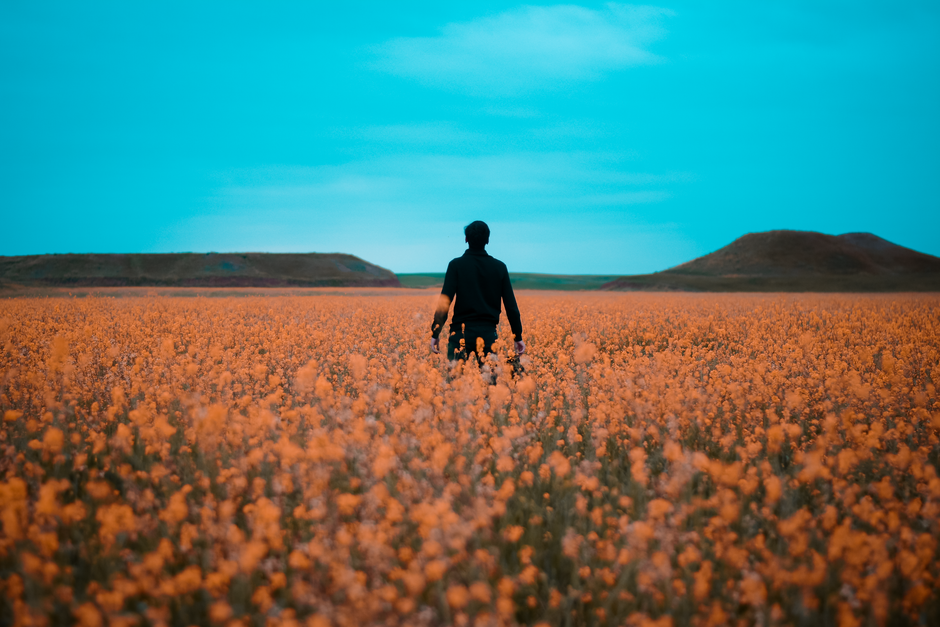
Most people in Riyadh already walk. The question wellness practitioners are increasingly asking is whether those walks are actually doing anything for the mind. Walking meditation — a structured practice of bringing deliberate, moment-by-moment attention to the physical act of moving — is gaining serious traction in the Kingdom's wellness community, particularly as temperatures drop after 7 p.m. and the city's parks fill up along King Abdullah Road and the King Salman Park development's new trail circuits.
The timing matters. Saudi Arabia's Vision 2030 health targets include raising the percentage of physically active citizens from roughly 28 percent in 2019 to 40 percent by 2030. That push has poured investment into walkable public infrastructure — King Salman Park alone, now in its final completion phases in northern Riyadh, spans over 13 square kilometres and includes dedicated pedestrian paths designed for exactly the kind of slow, intentional movement that walking meditation requires. The infrastructure is there. The practice just needs to catch up.
The technique has roots in Buddhist Theravāda tradition but has been adapted thoroughly by secular mindfulness programs, most notably the eight-week Mindfulness-Based Stress Reduction course developed at the University of Massachusetts Medical School in 1979. The core instruction is deceptively simple: slow down, feel your foot make contact with the ground, notice the heel strike, the roll through the arch, the push-off at the toe. Repeat, without your mind running three meetings ahead.
Unlike seated meditation, walking meditation sidesteps one of the biggest barriers local practitioners cite — the discomfort of sitting still for extended periods. It also fits naturally into routines already anchored to the city's geography. The 2.4-kilometre promenade loop at Wadi Hanifah, the restored natural valley running through southwestern Riyadh, is frequently cited by Riyadh-based wellness coaches as an ideal setting: the sound of water from the restored channel, the shade from planted acacias, and enough distance from traffic to actually hear your own footsteps.
The Wellness Destination, a health and lifestyle centre operating on Tahlia Street, has offered structured mindful movement sessions since early 2025, incorporating walking components into its broader mindfulness programming. Sessions run 75 minutes and are priced at approximately SAR 180 per person. Similar programming has appeared at Cenomi Active facilities across the city, though the walking meditation component there tends to be embedded within broader yoga or stress-management workshops rather than offered as a standalone class.
Riyadh's urban design has historically prioritised driving, but that is shifting. The Riyadh Metro, now carrying over 100,000 passengers on weekdays, has nudged residents toward walking the first and last kilometre of their commutes — an accidental but useful on-ramp to mindful movement. Commuters who deliberately slow that station-to-office stretch, phone in a pocket rather than in hand, are already doing something close to informal walking meditation without naming it as such.
The practical entry point is straightforward. Choose a route with minimal decision-making — the same path each time removes the cognitive load of navigation and lets attention settle on sensation. King Abdullah Economic City expats and Diplomatic Quarter residents have noted the DQ's 7-kilometre perimeter road, relatively free of commercial interruption, works well for this reason. Set a timer for 20 minutes rather than a distance goal. Walk at about 60 percent of your usual pace. If the mind wanders to a to-do list — and it will — the instruction from every credible mindfulness program is simply to notice that it happened and return attention to the feet.
Anyone dealing with anxiety, sleep disruption or chronic stress should speak with a licensed healthcare provider before treating walking meditation as a replacement for clinical support. The Saudi Commission for Health Specialties maintains a directory of registered mental health practitioners, and several Riyadh hospitals including King Faisal Specialist Hospital run outpatient psychology services for those needing more structured intervention. Walking meditation is a complement, not a cure — but as a daily habit layered onto routes most residents are already taking, the barrier to starting is essentially zero.
About this article
Published by The Daily Riyadh
Spread the word
Daily brief
Free, in your inbox before 7am. Weekdays.
The Daily Network — local news across Australia